Next Stop: Bacteria
What's Riding With You? The Hidden Bacteria on Houston METRO
Every day, thousands of Houstonians rely on METRO buses and trains to get to work, school, healthcare appointments, and other destinations. While public transportation helps keep the city moving, it may also be carrying something riders can't see: bacteria.
Research shows that the biggest source of bacteria on public transportation is often not the buses or trains themselves, but the people using them. Riders bring microbes from their hands, phones, backpacks, clothing, and shoes onto transit systems every day.
Scientists have also found that bacteria are not spread evenly across public transportation. High-touch surfaces such as poles, handrails, buttons, and fare machines often become hotspots because they are touched by hundreds or even thousands of riders daily. Floors can contain an even greater variety of microbes due to constant foot traffic.
Houston METRO regularly cleans and disinfects its vehicles and facilities, with an increased focus on sanitizing high-touch surfaces following the COVID-19 pandemic. However, experts say bacteria can quickly return as new passengers board throughout the day.
While the presence of bacteria does not automatically mean a surface is dangerous, the findings raise questions about rider hygiene, cleaning practices, and how public transportation systems balance sanitation with serving thousands of passengers each day.
So next time you ride a metro bus, consider where you touch or what you touch.
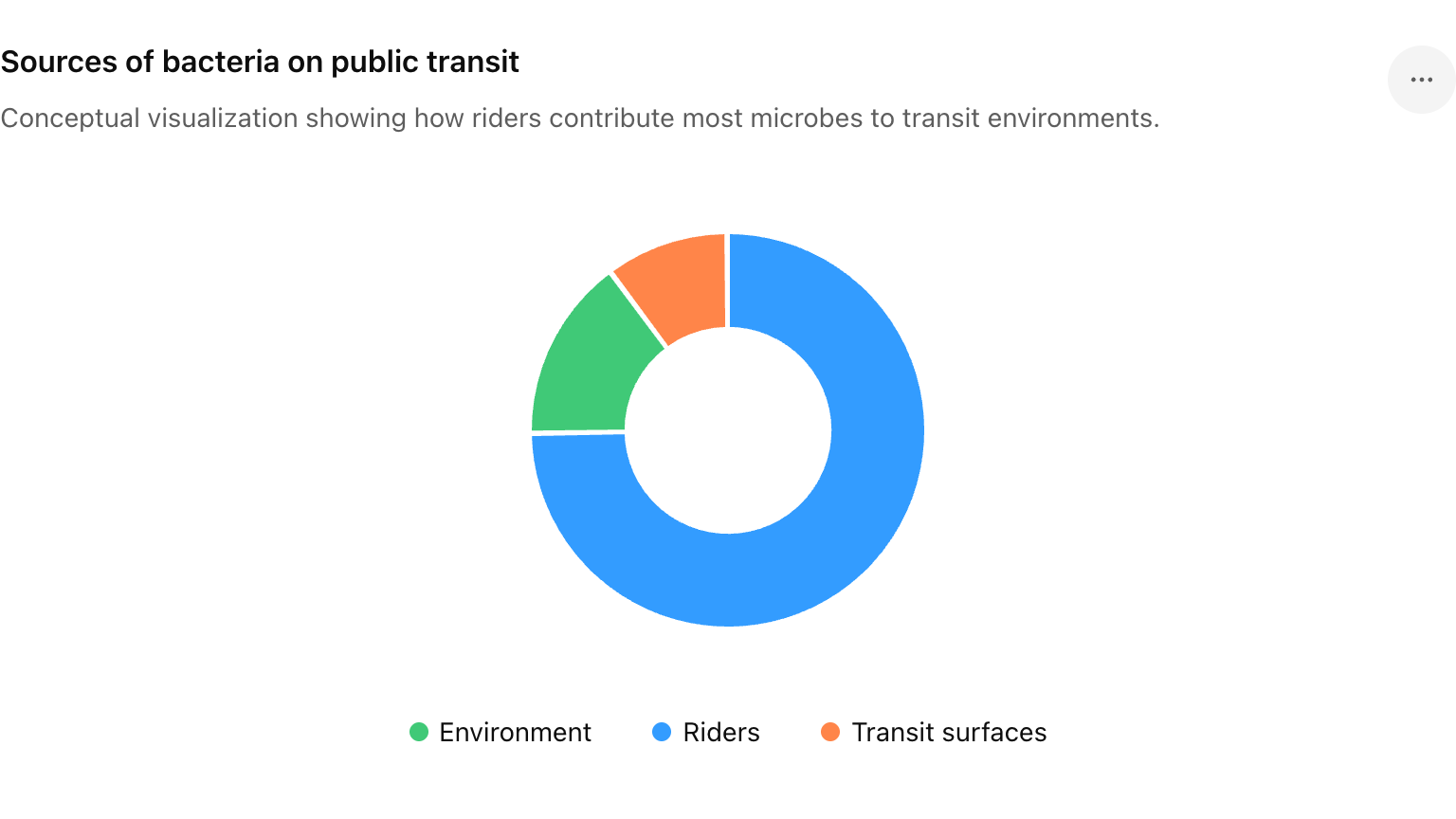
Breakdown based on research showing riders are the primary source of microbes.
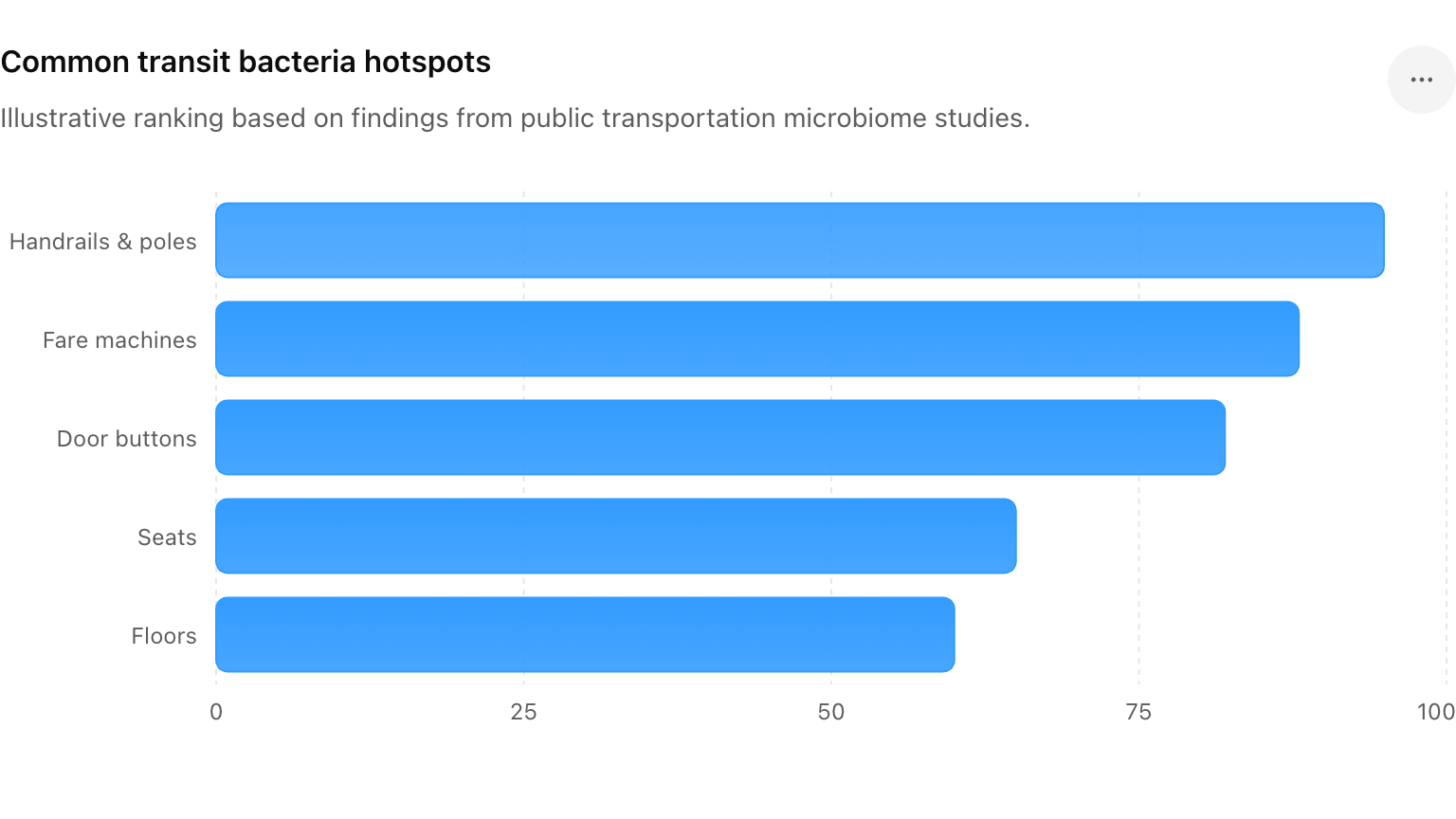
Illustrative graphic based on common findings from transit research studies.
